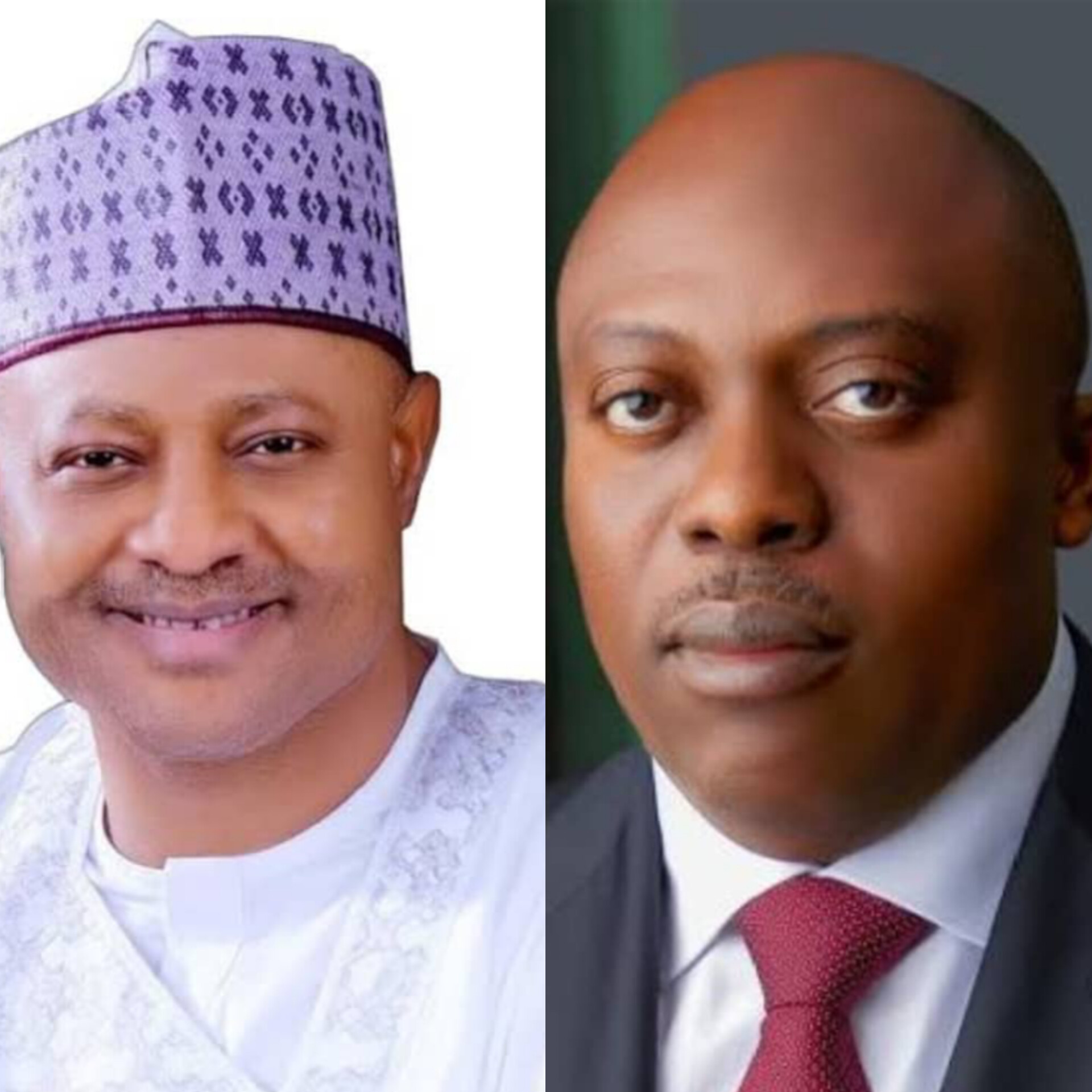
Gazali Haruna
By: Godwin Onuh Odeh
Distant and contemporary history is replete with instances of state failure. This is not limited to Africa’s Ghana empire, Mali, Songhai, Oyo empire, Kanem Bornu, Bini Kingdom, and the famous Kwararafa Kingdom, whose political and territorial influence reached as far as Bornu. The collapse of these empires serves as a stark reminder of the dangers of internal decay, external pressures, and leadership crises.
In Europe, the Roman empire crumbled, leading to total blackness and backwardness in Europe from 476 AD to 1492. The Dark Ages that followed serve as a testament to the devastating consequences of state collapse. Similarly, in Asia, various dynasties in ancient China, among others succumbed to internal strife and external invasions, while in South America, the Aztecs and Inca kingdoms fell apart due to a combination of factors, including leadership crises, economic mismanagement, and external aggression.
In recent history, the USSR dissolved in 1992, giving way to independent Slavic states. This development sent shockwaves across the globe, highlighting the fragility of even the most powerful states. In Africa, including Nigeria, civil wars were fought in the name of ethnic principalities agitating for self-determination and independence from perceived economic, political, and social discrimination and marginalization. The crisis in South and North Sudan since 2011 add another dimension to the narrative.
At the root of each state failure are internal troubles and external pressures that push states into a tight corner, making it difficult for them to function effectively. Insecurity and internal political crises triggered by economic factors are common challenges that have led to state collapse across cultures, time, and space. These symptoms are prevalent in several African states ravaged by terrorism, banditry, political unrest, agitation, corruption, and financial mismanagement.
The symptoms of state collapse are aptly captured by Zartman: “As the decision-making center of government, the State is paralyzed and inoperative; laws are not made, order is not preserved, and societal cohesion is not enhanced. As a symbol of identity, it has lost its power of conferring name on its people and a meaning to their social action. As a territory, it is no longer assured of security and provisionment by a central sovereign organization. As the authoritative political institution, it has lost its legitimacy which is therefore up for grabs, and so has lost its right to command and conduct public affairs. As a system of socio-economic organization, its functional balance of inputs and output is destroyed, it no longer receives support from nor exercises control, and it is no longer even the target of demands, because its people know that it is incapable of providing supplies”( W I. Zartman cited in G O. Odeh, ” Globalisation and African Development: Where are we and Where are we going in the twenty first century?” in Journal of Globalisation and International Studies O O. Okpeh (ed,), (6)1&2,2012, p.93.
Nigeria, with its diverse ethnic groups, complex history, and abundant natural resources, is a crucial player in African politics. However, the country faces significant challenges, including insecurity, corruption, and economic mismanagement. These challenges, if left unaddressed, could push Nigeria to the brink of collapse, with devastating consequences for the country, the region, and the continent.
The treatise serves as a caution to Nigeria and its leaders, urging them to rise to the challenge and address the country’s pressing issues. Nigeria must confront its demons, including corruption, insecurity, and economic mismanagement, and work towards building a more inclusive, equitable, and prosperous society. This would make African States, especially Nigeria escape the predictable doom of the century by Henry Kissinger, that the global system would be characterised by seemingly contradictions: growing globalisation on the one hand ,and fragmentation on the other hand.
The acclaimed giant appears to have slept for long, like China before its success story. Let her wake up and shake the world. Nigeria has the potential to become a major player on the global stage, but this requires visionary leadership, effective governance, and a commitment to addressing the country’s pressing challenges.
Dr. Godwin Onuh Odeh is a Public Affairs Analyst and Commentator, and a Tutor in the Department of History and International Studies, Sokoto State University, Sokoto, Nigeria.